
Buying a Home with a Pergola or Gazebo in Austin
A pergola with rotted posts can cost $3,000 or more to rebuild from the footings up. An unpermitted gazebo can delay your closing, complicate a future insurance claim, or force a teardown you never budgeted for. If you’re buying a home with a pergola or gazebo already standing in the backyard, that structure deserves the same scrutiny you’d give the roof, because in Austin’s heat and clay soil, it’s often exactly where the next expensive surprise hides.
Most general home inspectors walk past outdoor structures with a glance. They confirm the pergola stands upright and move on to the HVAC unit. That’s a problem, because a pergola or gazebo carries its own failure points, its own permit history, and its own cost implications for resale down the road. This guide walks you through what to physically check, what to ask the seller and the city, and what your findings actually mean for your offer.
Why an Existing Pergola or Gazebo Deserves Its Own Inspection
By the end of this section, you’ll know exactly what a standard home inspection misses on an outdoor structure, and why that gap matters to your bottom line.
Standard home inspections in Texas follow a scope built around the primary dwelling: roof, foundation, plumbing, electrical, HVAC. Accessory structures like pergolas and gazebos usually get a line item, if that. Inspectors aren’t required to test footing depth, verify permit history, or assess post connections the way they would a load-bearing wall inside the house.
That gap creates three kinds of risk for a buyer:
- Structural risk. A pergola with post rot at the base or a gazebo with a settled footing can become a genuine safety hazard, particularly during Austin’s spring thunderstorms and straight-line wind events.
- Permit risk. An unpermitted structure can complicate future renovation permits, since the city may require you to bring the existing structure into compliance before approving new work nearby.
- Financial risk. Homeowner’s insurance policies sometimes exclude damage to unpermitted structures. Storm damage to that gazebo could come entirely out of your pocket.
None of this means walk away from the house.
It means walk into the backyard with a checklist.
What Should You Look For When Inspecting a Pergola or Gazebo Before Buying?
Here’s what you’ll know how to check by the end of this section: the specific points on a pergola or gazebo where problems start, and how to spot them without any special tools.
The visual inspection starts at the ground and works up. Post bases and footings take the most abuse in Central Texas, because our expansive clay soil swells and contracts with every rain cycle, and that movement stresses whatever is anchored into it.
Start with the footings and post bases. Look for a post that sits noticeably lower than the others, gaps between the post base and the concrete pad, or cracked and heaving concrete near the structure. Any of these can point to footing settlement, which in clay soil areas is one of the more expensive repairs, because it usually means re-pouring rather than patching.
Check where wood meets ground or concrete. This is where rot typically starts first, and it’s rarely visible from a casual walk-through. Press a screwdriver or car key into the base of each post, about six inches up from grade. If it sinks in easily or the wood feels spongy, you’re looking at active rot that’s already compromised the post’s load capacity, even if the surface paint looks fine.
Here’s a pattern interrupt worth remembering: a pergola that looks great from the patio table can still be failing at the one spot nobody checks.
Signs of Pergola Damage That Signal a Bigger Problem
Work through the rest of the structure with this checklist:
- Attachment points. For attached pergolas, examine the ledger board where it meets the house. Look for gaps, rust streaks below lag bolts, or soft wood, all signs that water has been getting behind the flashing.
- Rafters and beams. Sight down each beam for sagging or bowing. A beam that’s visibly bent under its own weight has likely exceeded its span rating or lost structural capacity to rot.
- Fasteners and hardware. Rusted brackets, loose bolts, or mismatched hardware from a past repair suggest the structure has had problems before, possibly ones nobody disclosed.
- Roof condition, for gazebos specifically. Check the roof decking for soft spots, water staining on the underside, and gutter function, since gazebos carry a solid roof load that pergolas don’t.
- Grading around the base. Confirm water drains away from the footings rather than pooling against them after rain.
If you spot two or more of these signs of pergola damage during a walk-through, that’s your signal to bring in someone who does this for a living before you finalize your offer.
Is a Gazebo Permitted in Austin? How to Check Before You Close
You’ll walk away from this section knowing exactly how to find out whether the structure on the property was ever legally permitted, and why that answer changes your negotiating position.
The City of Austin exempts some accessory structures from a building permit, but the thresholds are specific, not general. Under the city’s current rules, a one-story detached accessory structure needs a permit unless it’s <cite index=”28-1″>no more than 200 square feet of floor area, no more than 15 feet in height, creates no dwelling, and contains no plumbing</cite>, and sits outside a flood hazard area, according to Austin Development Services’ exemption guidelines. Anything larger, taller, wired for lighting or fans, or wall-mounted to the house as a ledger-attached pergola generally crosses into permit territory.
Setbacks matter too. Most standard single-family lots in Austin fall under SF-3 zoning, which typically calls for a 5-foot side yard setback and around a 5-foot rear yard setback for structures under 15 feet tall, though the exact figure varies by zoning district, lot configuration, and watershed overlay. A structure built too close to the property line can trigger a variance requirement even when its square footage falls under the permit exemption.
Here’s how to actually verify permit history before closing, rather than taking a listing description at its word:
- Pull the property’s permit record through the City of Austin’s online permit search using the address. Look for any structure or accessory building permit dated near when the pergola or gazebo appears to have been built.
- Ask the seller directly whether the structure was permitted, and request documentation, including engineer stamps if the structure exceeds exemption thresholds.
- Check the survey for the accessory structure. If it’s on file with the county but doesn’t match the physical footprint, that’s worth a direct question.
- Talk to your title company about whether an unpermitted structure affects title insurance or requires a specific exception on the policy.
Unpermitted work doesn’t always mean a dealbreaker. It does mean you should know before you own it, because the city can require retroactive permitting, removal, or a certified inspection down the line, and that cost transfers to whoever holds the deed when it comes up.
What to Do With Your Findings: Negotiate, Repair, or Plan to Rebuild
By the end of this section you’ll have a framework for turning your inspection notes into an actual next step, not just a worry.
Once you’ve walked the structure and pulled the permit history, your findings generally sort into three buckets.
If the structure shows minor cosmetic wear but sound bones (solid footings, dry wood, clean attachment points), that’s a negotiating chip more than a dealbreaker. Ask for a modest credit, or simply factor routine maintenance into your first-year budget.
If you found active rot, footing movement, or an unpermitted structure larger than the exemption threshold, that’s a repair-or-remove decision. It belongs in your offer, not in a conversation you have six months after closing. Request a pre-closing structural assessment, negotiate a credit toward repair, or ask the seller to permit and correct the issue before the sale closes.
If the damage is extensive enough that repair costs approach or exceed a rebuild, plan the rebuild into your first-year homeownership budget instead of treating it as a surprise. A structure with failed footings and rotted framing rarely gets cheaper to fix the longer it sits.
Our team provides exterior remodeling services in Austin that include gazebo and pergola repair, rebuild, and permit correction, so you have somewhere to bring these findings before you’re locked into a decision.
Pergola Repair Cost in Austin: What Drives Repair vs. Rebuild
Here’s the short answer up front: pergola repair cost in Austin typically ranges from a few hundred dollars for hardware and board replacement up into the low five figures for a full footing and structural rebuild, and the deciding factor is almost always the foundation.
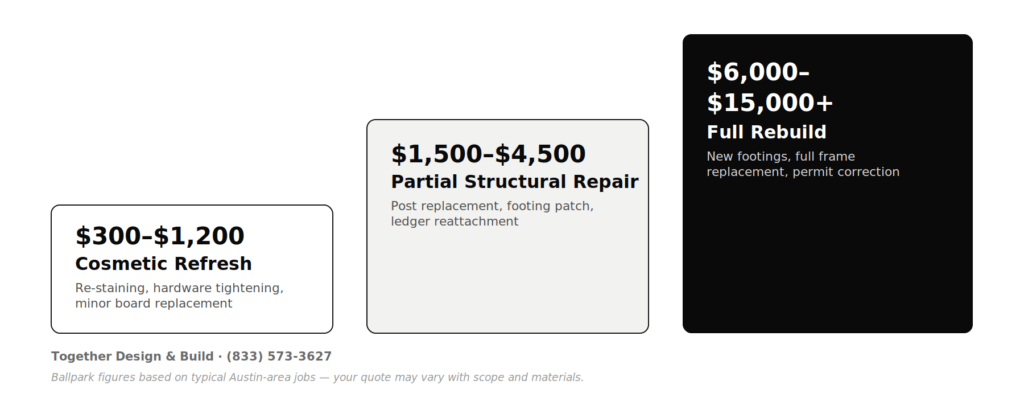
Three factors swing these numbers more than anything else: whether the footings need to be re-poured (clay soil movement makes this common across Austin), whether the structure needs a retroactive permit and engineer review, and whether the roof style is a simple slatted pergola or a fully enclosed gazebo with roofing materials to match.
That’s the trade-off worth sitting with.
A cheap cosmetic fix on a structure with failing footings just delays the real repair, usually at a higher price once the damage spreads to the framing above it.
Get a Pergola and Gazebo Assessment Before You Close
If you’re actively touring homes in areas like South Congress, Travis Heights, or near Zilker Park where mature backyard structures are common, build a pergola inspection checklist walk-through into your showing schedule, not just your final inspection period. The same goes if you’ve already closed and you’re staring at a structure you inherited sight unseen.
Together Design & Build offers a free on-site assessment of any existing pergola or gazebo in the Austin area. We’ll tell you honestly whether you’re looking at a $400 fix or a full rebuild, and we’ll help you understand what the city’s permit records show before you commit to either. Call us at (833) 573-3627 to schedule a walkthrough, whether you’re still under contract or you just picked up the keys.
Frequently Asked Questions
Do I need a permit for a pergola in Austin? It depends on size and height. A one-story detached accessory structure under 200 square feet and 15 feet tall, with no plumbing, generally doesn’t require a permit. Larger, taller, or house-attached structures typically do.
How do I find out if a gazebo was permitted before I bought the home? Search the City of Austin’s online permit records by property address, and ask the seller directly for documentation. Your title company can also flag unpermitted structures during the title search.
What are the first signs of pergola damage I should look for? Start at the base of each post. Soft or spongy wood, gaps between post and footing, and cracked concrete pads are the earliest and most common warning signs.
How much does it cost to repair a pergola in Austin? Cosmetic repairs run a few hundred dollars. Structural repairs involving footings or framing typically fall between $1,500 and $15,000, depending on the extent of the damage and whether a permit correction is required.
Should a damaged pergola stop me from buying the house? Rarely on its own. Most issues are negotiable through a credit or repair agreement, but you should know the full scope before you close, not after.